
From the first of January, a fifteen-year-old in Illinois may ride a Class 1 or Class 2 low-speed electric bicycle. A Class 3 requires sixteen. So does any electric scooter, skateboard or unicycle. Fit a motor above 750 watts and the machine stops being a bicycle at all: it becomes a “motor driven cycle,” and the rider needs a driver’s licence and a certificate of title. Build a micromobility device capable of more than twenty-eight miles an hour and it is barred from public roads altogether, whatever the speed limit. Illinois Governor JB Pritzker signed Senate Bill 3484 on 26 August, after it passed both chambers with bipartisan majorities on 1 June, supported by law enforcement groups and the Illinois Municipal League [1][2].
Age bands, a hard speed ceiling, and a threshold at which a rider crosses into a regime requiring a licence and a title. The architecture is a graduated licensing scheme, and anyone familiar with the European A1/A2/A3 categories, or with Australia’s LAMS list, would recognise it. Illinois assembled it in a single legislative session, for machines that mostly cannot exceed twenty-eight miles an hour.
The reporting on Senate Bill 3484, including the Capitol News Illinois account I first worked from, says that electric machines capable of more than twenty-eight miles an hour will be “regulated similarly to motorcycles” and will require a driver’s licence, insurance, an ownership title and registration with the state [2]. The enrolled text does not say that. Electric micromobility devices are expressly exempted from certificates of title, from registration, from the driver’s licence requirement, and from compulsory liability insurance, in four separate sections [1]. The licence and title obligations attach instead to a motor rating above seven hundred and fifty watts, and a micromobility device capable of exceeding twenty-eight miles an hour is prohibited from public highways rather than licensed for them [1]. A pedal-equipped electric bicycle over that wattage does become a “motor driven cycle” requiring a licence, so the coverage is not baseless. It is describing a regime the statute does not create. Public understanding of what a new road safety law demands is formed almost entirely by that first week of reporting, and in this case the reporting errs towards making the law sound stricter than it is.
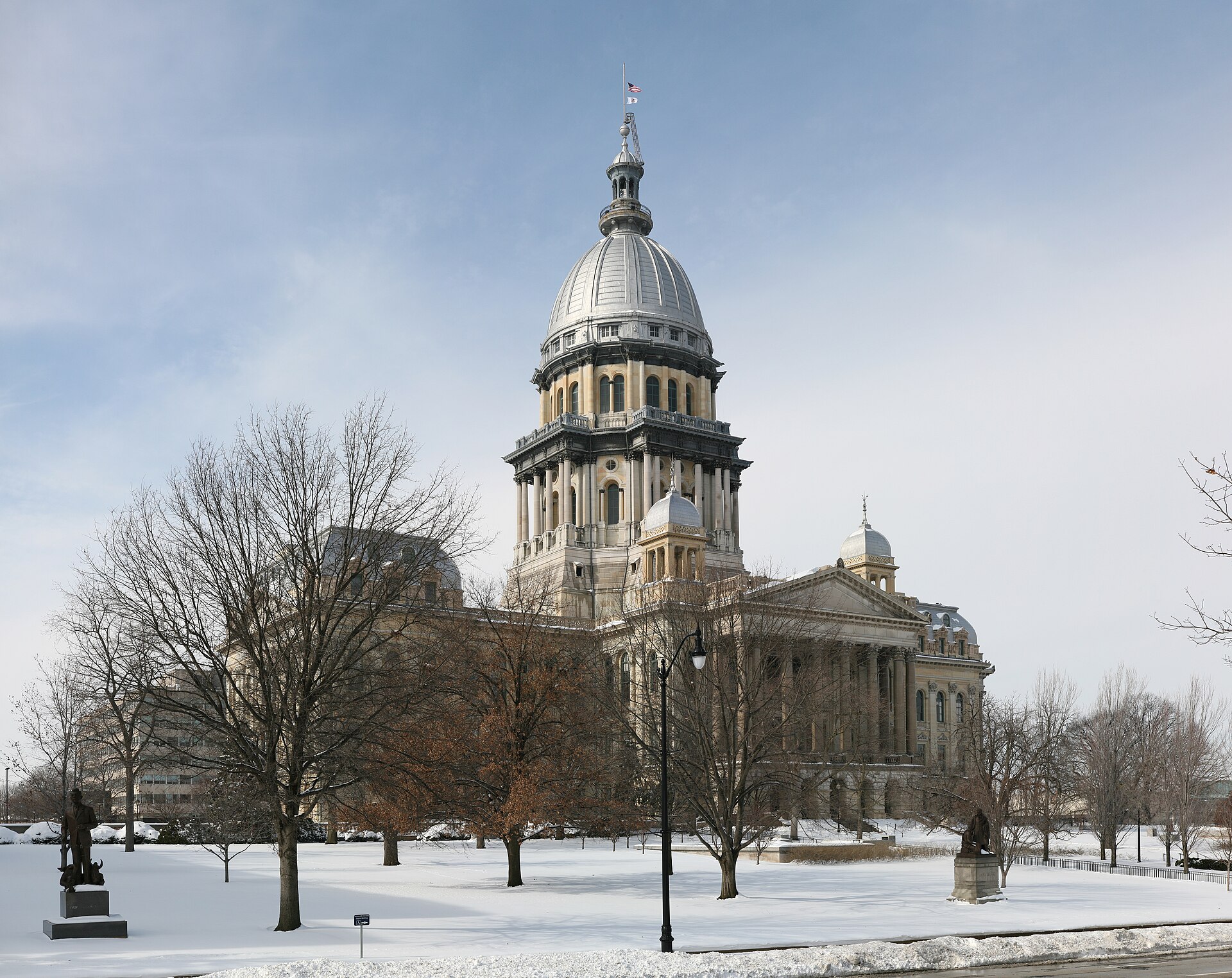
The same state has no motorcycle helmet law. Not for adults, not for minors, not for learner permit holders. The IIHS table, updated this month, records Illinois as “no law” in both of its columns, one of three states, with Iowa and New Hampshire, that require nothing of anybody [3].
Section 11-208 of the Vehicle Code provides that “no unit of local government, including a home rule unit, may enact an ordinance requiring motorcycle users to wear protective headgear” [4]. The clause is not new and Senate Bill 3484 does not alter it; it has stood in that form since at least 2019 [4]. But Section 11-208 is one of the sections this Act amends. The legislature had it open this spring, rewrote the subsection governing what local authorities may do about bicycles and low-speed electric bicycles, and left the helmet pre-emption exactly where it was [1]. Illinois does not merely decline to require helmets of adults. It forbids Chicago from requiring them of anyone.
Of the 5,950 motorcycle riders killed on American roads in 2024, 2,158 held no valid licence, or thirty-six percent. The equivalent proportion among passenger-vehicle drivers killed the same year was seventeen percent. In 2015 the motorcycle share was twenty-nine percent, and it has not fallen below thirty-five percent in any year since 2020. These are the Insurance Institute for Highway Safety’s counts, compiled from the National Highway Traffic Safety Administration’s Fatality Analysis Reporting System, which is the federal census of every fatal crash on a public road [5].
The American Motorcyclist Association’s board position statement on rider education records that the organisation has “aggressively supported research-based, state-approved motorcycle rider training programs.” It then states that “despite the indisputable value of a properly structured rider education program, the AMA opposes legislation that would make such training mandatory for adults.” Among the reasons offered is that mandated training “has the potential to exacerbate the problem of unlicensed riders.” The statement cites NHTSA research putting the unlicensed share of motorcyclist fatalities at about twenty-two percent [6].
Training capacity in most states is finite, waiting lists are real, and a requirement that cannot be met on any reasonable timescale does push people towards riding without an endorsement rather than waiting for one. I have some sympathy with the logic. The number it rests on has moved. Both figures measure the same thing, the share of riders killed who held no valid licence at the time of the crash, and both come from the same federal census of fatal crashes. The AMA attributes its twenty-two percent to NHTSA without giving a year [6]. FARS put the figure at thirty-six percent in 2024 [5]. Twenty-two percent was the case for keeping training voluntary. The data no longer supports it.
A membership organisation composed of people who already ride has no natural constituency for a rule that makes it harder to start riding. That would be true of any body in the same position, and it requires nobody to be acting in bad faith. It does mean that the most audible voice in American motorcycle policy is structurally unlikely to ask for the measure the data points towards.
Legislation introduced in British Columbia in April 2025 establishes a Motorcyclist Licensing Program that every new rider must complete, carrying a restriction period and protective-gear requirements to be set out in regulation, with implementation planned for early 2026 [7]. The province’s announcement in July confirms that the car-side Graduated Licensing Program changes take effect on 19 October 2026, and that regulatory changes to the Motorcyclist Licensing Program will now come into effect in 2027 [8]. The cars went first and the motorcycles slipped a year. I read nothing conspiratorial into that, but it is a familiar shape.
In Britain, the DVSA consultation “Improving moped and motorcycle training, testing and licensing” ran from 7 January to 11 May 2026 and asked, among other things, whether riders should be able to upgrade a licence category by completing a progressive access training course rather than re-sitting a test. The page still reads “we are analysing your feedback.” No outcome has been published [9].
All fifty states, the District of Columbia and Puerto Rico require a motorcycle operator licence or endorsement before riding on a public highway [19]. The law is already there. More than a third of the riders who died in 2024 were riding without one, and the AMA’s own statement concedes the reason in plain terms: unlicensed riding is “nearly impossible to monitor” [6]. Enforcement of the requirement is, in practice, close to absent, and that is not a gap another statute can close.
I have been making this argument for some time. The 2024 figures are the result of nobody acting on it, and the infrastructure around American rider training and safety legislation is not fit for purpose.
The AMA “strongly encourages” protective equipment including a DOT-certified helmet, and in the same breath holds that “adults should have the right to voluntarily decide when to wear a helmet” [10]. It opposes mandatory adult helmet laws, and it opposes making rider training mandatory for adults [6][10]. Encouragement, in other words, and no law. The Motorcycle Safety Foundation writes the curriculum that forty-five states and every branch of the US military use, runs a Government Relations Office near Washington that “promotes the best interests of motorcyclists before the U.S. Congress and federal regulatory agencies, as well as at state legislatures,” and reported revenue of $8.5 million in 2024 [11][12]. I have not found an MSF campaign for a universal helmet law in any state.
The MSF describes itself, in its own words, as “funded by a diverse group of multi-national motorcycle manufacturers/distributors,” naming BMW, BRP, Harley-Davidson, Honda, Kawasaki, KTM, Polaris, Suzuki, Triumph and Yamaha [11]. Its entire board of trustees is drawn from those companies. The chair works for American Honda, the vice chair for Kawasaki, the secretary-treasurer for Yamaha, and the Harley-Davidson trustee is that company’s Government Affairs manager [11]. The same page calls the MSF “an Independent Safety-Minded Organization” [11]. The AMA’s arrangement is less stark but not unrelated: four of its twelve board seats are elected by its business membership, a category that includes the manufacturers.
Both organisations publish extensively on education, training and personal responsibility. Neither campaigns for a mandatory adult helmet law, and the AMA opposes making rider training mandatory for adults [6][10]. The difference between those two categories of measure is commercial. A voluntary safety course costs a manufacturer nothing, because the rider takes the course and still buys the motorcycle. A mandatory licence tier or a helmet law works differently: it puts a legal obstacle between a customer and a purchase.
The MSF and the Motorcycle Industry Council, the powersports trade association, are separate corporations. MIC member companies founded the MSF in 1972 and it was established independently the following year [11]. That separation is a matter of incorporation rather than management. The MIC, the MSF, the Specialty Vehicle Institute of America and the Recreational Off-Highway Vehicle Association describe themselves collectively as “the Associations,” share a headquarters in Irvine, California, share a government relations office in metropolitan Washington, and share a chief executive. Christy LaCurelle was re-elected President and CEO of the Motorcycle Industry Council by its board in April 2026 [14], and is listed as President and CEO of the Motorcycle Safety Foundation [11]. When the post last fell vacant, in March 2024, the four boards voted unanimously to appoint one acting president and CEO across all four organisations, and the man they chose, Scott Schloegel, carried on at the same time as senior vice president of government relations [15]. He is the same official who testified on Maine’s PFAS bill [13].
The industry has pressed for carve-outs excluding youth motorcycles and ATVs from juvenile-product PFAS restrictions, and put its government relations weight behind chemical exemptions in individual states [13]. PFAS matters; I am not pretending otherwise. It is also true that thirty-six percent of the riders who died in 2024 held no licence, and that the safety foundation writing America’s rider curriculum answers to the same chief executive as the trade association lobbying on solvents.
Section 301 duties on imports from more than eighty countries took effect on 24 July [16]. The United States imposed fifty percent tariffs on around five percent of Canadian imports on 22 August, motorcycles above 800cc among them. Canada answered on 8 September with a fifty percent counter-tariff on American motorcycles above 800cc, doubling the twenty-five percent already in place, and the White House announced the following day that Canadian motorcycles and mopeds over 800cc, tariff heading 8711.50.00, would be barred from import altogether from 29 September [17][18]. As I write on 14 September, no pause or settlement has been announced and the ban is still scheduled. Tariffs had been the number one issue at the MIC’s own Capitol Hill Fly-In in May, where about seventy industry representatives took 114 meetings across offices representing thirty-one states [16]. The council’s published response in September was that its government relations team “continues to monitor federal trade actions,” that member companies should review the applicable tariff lists and their own supply chains, and that businesses should consult trade counsel [17].
Neither body campaigns for graduated licensing or a federal helmet standard, which I have come to expect and to regret. Neither has shifted the tariff policy now hammering the manufacturers they exist to represent, which is a separate and bleaker finding. Nero fiddles while Rome burns.
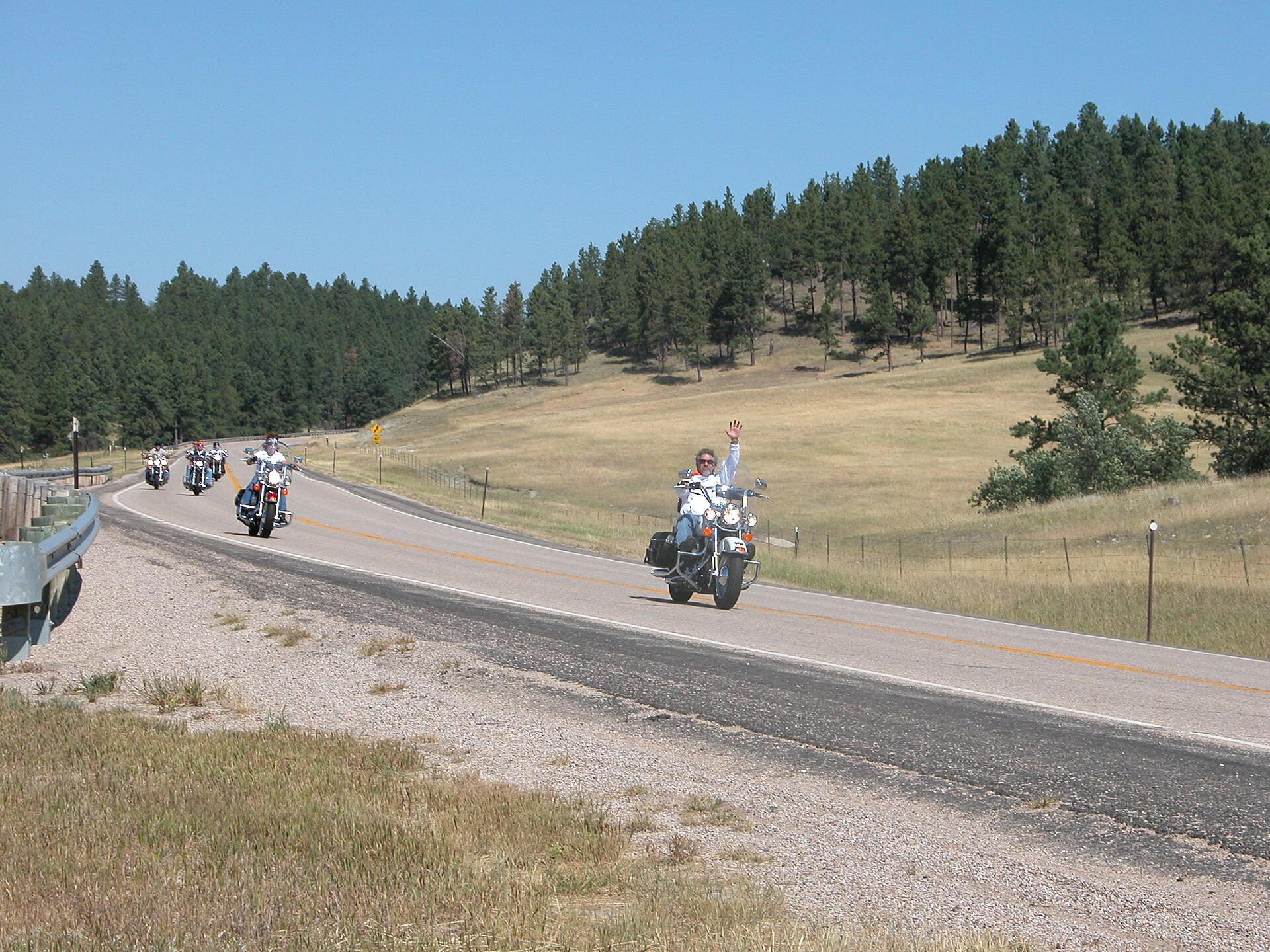
Rider safety is being deprioritised behind commercial interest. Somebody should say that plainly, and I would rather it were a rider than a coroner.
Graduated licensing and enforceable training requirements are now desperately needed, and they are proven to work in every jurisdiction. So is pressure from inside the riding community itself, because the rules already on the books are being disregarded by the people they were written to protect. Illinois has demonstrated this summer that a legislature can write a careful, tiered, age-graduated framework when it decides a category of machine warrants one. It did so for electric bicycles and scooters, and not for the motorcycles that kill far more of us.
References
- Illinois Public Act 104-0854 (Senate Bill 3484, 104th General Assembly), enrolled text. Governor approved 26 August 2026, effective 1 January 2027. Ages at 625 ILCS 5/11-1517(h), 11-1516(a) and 11-1435(d); “motor driven cycle” definition at 1-145.001; licence requirement and the 28 mph highway prohibition at 11-1403.4 and 11-1435(b). https://www.ilga.gov/Legislation/BillStatus/FullText?GAID=18&DocNum=3484&DocTypeID=SB&LegId=166485&SessionID=114
- Ben Szalinski, “Putting on the brakes: New Illinois law establishes rules for e-bikes, scooters,” Capitol News Illinois, 26 August 2026. https://capitolnewsillinois.com/news/new-illinois-law-establishes-rules-for-electronic-bikes-scooters/
- “Motorcycle helmet use laws,” Insurance Institute for Highway Safety, September 2026. https://www.iihs.org/research-areas/motorcycles/motorcycle-helmet-laws-table
- 625 ILCS 5/11-208, Illinois Compiled Statutes, current text as of September 2026 (Source: P.A. 101-123, eff. 7-26-19). Subsection (e) contains the municipal helmet pre-emption. https://www.ilga.gov/Legislation/ILCS/Fulltext?DocName=062500050K11-208
- “Fatality Facts 2024: Motorcycles and ATVs,” Insurance Institute for Highway Safety, 2026. https://www.iihs.org/research-areas/fatality-statistics/detail/motorcycles-and-atvs
- “Motorcycle Rider Education,” AMA Board Position Statements, American Motorcyclist Association. https://americanmotorcyclist.com/rights/ama-board-position-statements/motorcycle-rider-education/
- “Graduated licensing changes improve accessibility, safety,” Government of British Columbia, 16 April 2025. https://news.gov.bc.ca/releases/2025PSSG0009-000346
- “Supporting road safety, streamlining licensing for new drivers,” Government of British Columbia, 20 July 2026. https://news.gov.bc.ca/releases/2026PSSG0061-000847
- “Improving moped and motorcycle training, testing and licensing,” Driver and Vehicle Standards Agency, published 7 January 2026, consultation closed 11 May 2026, outcome not yet published as of 14 September 2026. https://www.gov.uk/government/consultations/improving-moped-and-motorcycle-training-testing-and-licensing
- “Voluntary Helmet Use,” AMA Board Position Statements, American Motorcyclist Association. https://americanmotorcyclist.com/rights/ama-board-position-statements/voluntary-helmet-use/
- “About MSF,” Motorcycle Safety Foundation, page last modified 17 March 2026. Sponsor list, the “funded by a diverse group of multi-national motorcycle manufacturers/distributors” description, the Board of Trustees roster, the Government Relations Office description, and the 1972-73 MIC founding history all appear on this page. https://msf-usa.org/about/
- Motorcycle Safety Foundation Inc, Irvine CA, Form 990 summary, total revenue $8,535,816 (2024). ProPublica Nonprofit Explorer. https://projects.propublica.org/nonprofits/search?q=motorcycle+safety+foundation
- Lemmy, “Motorcycle industry concerned about laws that could make some riding gear illegal,” RevZilla Common Tread, on MIC senior vice president of government relations Scott Schloegel testifying on Maine PFAS legislation; and Motorcycle Industry Council Capitol Hill Fly-In coverage on sought PFAS carve-outs for youth motorcycles and ATVs. https://www.revzilla.com/common-tread/motorcycle-industry-pfas-laws
- “MIC board re-elects Brooks as Chair, announces 2026 leadership slate,” Powersports Business, 1 April 2026. Christy LaCurelle re-elected President and CEO of the Motorcycle Industry Council. https://powersportsbusiness.com/news/motorcycle/2026/04/01/mic-board-re-elects-brooks-as-chair-announces-2026-leadership-slate/
- “MIC, MSF, SVIA, ROHVA Appoint Interim Leadership: Scott Schloegel Named Acting President, CEO,” Motorcycle Safety Foundation, 14 March 2024. The four boards appoint a single acting president and CEO across all four organisations, which the release refers to collectively as “the Associations.” https://msf-usa.org/msf-news/mic-msf-svia-rohva-appoint-interim-leadershipscott-schloegel-named-acting-president-ceo/
- “Powersports industry brings tariffs, trail funding concerns to Fly-In,” Powersports Business, 2 June 2026, and “Could new Section 301 tariff probes impact powersports industry?”, Powersports Business, 1 July 2026. https://powersportsbusiness.com/news/motorcycle/2026/06/02/powersports-industry-takes-unified-message-to-capitol-hill-during-record-setting-fly-in/
- “U.S.-Canada trade war escalates, creating new pressure for motorcycle industry,” Powersports Business, 9 September 2026. Canadian 50% counter-tariff of 8 September, US 50% duties of 22 August, the announced 29 September import prohibition, and the MIC Government Relations statement. https://powersportsbusiness.com/news/motorcycle/2026/09/09/u-s-canada-trade-war-escalates-creating-new-pressure-for-motorcycle-industry/
- “Motorcycle Licensing,” American Association of Motor Vehicle Administrators, and NHTSA, “Guidelines for Motorcycle Operator Licensing” (DOT HS 811 141). All 50 states, DC and Puerto Rico require a motorcycle operator licence or endorsement. https://www.aamva.org/topics/motorcycle-licensing
- “U.S. reveals import ban on slew of Canadian goods as trade war escalates,” CNBC, 9 September 2026; and Blake, Cassels & Graydon LLP, “U.S.-Canada Tariffs: Timeline of Key Dates and Documents,” updated 4 September 2026, for the 22 August US tariffs and the 8 September Canadian counter-tariffs on approximately C$27.6-billion of US imports. https://www.cnbc.com/2026/09/09/us-canada-trade-war-import-ban.html